
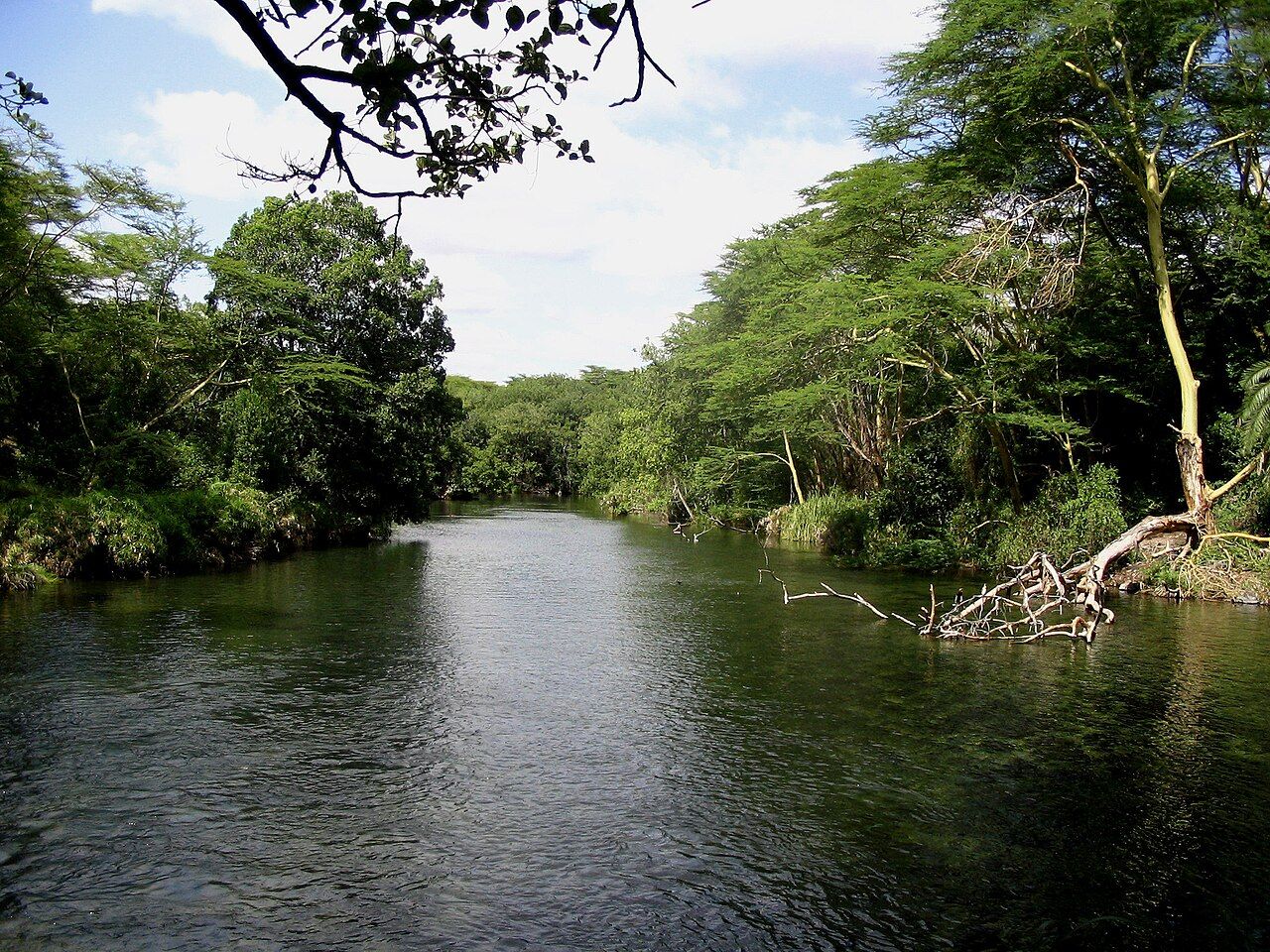
Drive south-west from Mtito Andei and the land rises into hills, outcrops and old volcanic cones. Tsavo West is the smaller, more varied half of the Tsavo parks, about 9,000 square kilometres between the Nairobi to Mombasa road and the Tanzanian border. Scenery is the main reason to come: black lava, green springs, rocky hills and long views toward Kilimanjaro on clear mornings.
Wildlife is often harder to see than in open grassland parks, because the bush is thick and the animals have plenty of room. That is part of the character. The rewards come slowly, and they tend to be quiet ones.
Volcanic country
The park lies beside a volcanic field linked to the Chyulu Hills, a young range of cones and lava along its north-western edge. Some of the lava here is very recent in geological terms, only a few hundred years old, and still bare and black. Rain falling on the Chyulus soaks straight into the porous rock and moves underground, and that hidden water surfaces in the springs that make Tsavo West unusual.
Elsewhere the park is a mix of hills, rocky outcrops, open plains and bush. Klipspringers stand on boulders, rock hyraxes bask on ledges and lesser kudu move through the thickets.
Roaring Rocks, a ridge near the centre of the park, gives wide views over the plains and is a good place to watch eagles and buzzards riding the wind. On clear mornings Kilimanjaro shows to the west, its snow-capped summit floating above the haze.
Mzima Springs
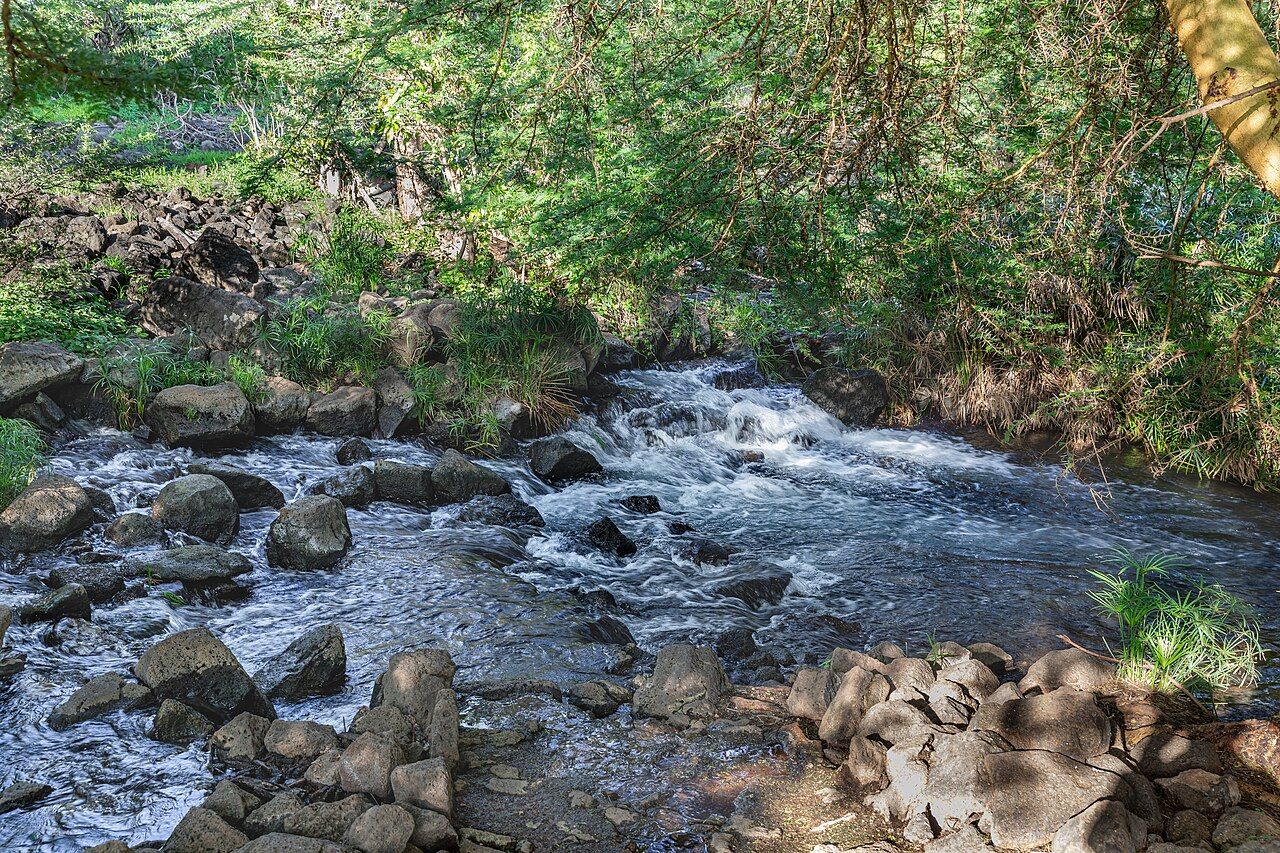
Mzima Springs is a chain of pools fed by water from the Chyulu Hills, which emerges here clear and cool after filtering through volcanic rock. Fig trees, palms and raffia shade the banks, and the pools hold hippos, crocodiles and large numbers of fish. Vervet monkeys move through the trees and the birdlife is rich.
Early morning is the best time at the springs, when the water is still, the light is soft and the hippos are often closer to the surface. Move quietly along the trail and you may see fish shoaling around their feet.
A short walking trail runs beside the pools, and an underwater viewing chamber lets you look through glass into the water. Hippos are often visible from the banks, though they spend much of the day submerged. Crocodiles are present, so stay on the trail and do not sit at the water's edge.
The springs matter beyond the park: a pipeline carries water from Mzima toward Mombasa and the coast. That makes them both a wildlife refuge and a resource that needs protecting.
Shetani lava flow and Chaimu crater
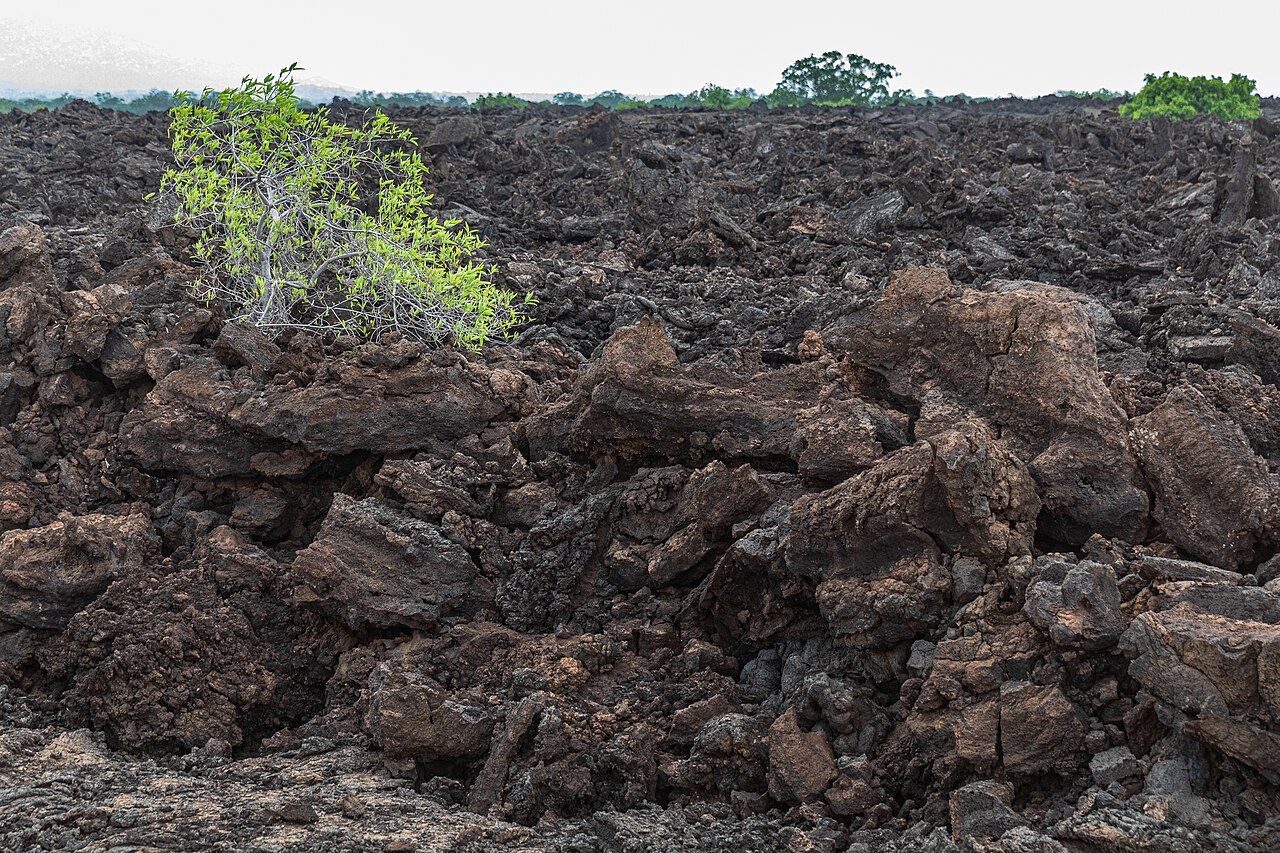
Shetani is a field of black, jagged lava spreading across the plain in the west of the park. It is thought to have erupted only around two to three centuries ago, and its name comes from the Swahili word for a devil or evil spirit. You can step onto the lava at a marked spot, but the rock is sharp and hot in the sun, so wear sturdy shoes and stay close to the vehicle. Caves in the lava are not for casual exploring.
Look closely at the edge of the flow and you will find plants already taking hold in the cracks, the first stage in turning bare rock back into soil. Over centuries, the same process made the older, greener lava country around it.
Chaimu crater is a cinder cone of dark volcanic ash and rubble close to the road. A path leads up its side. The climb is short but steep and loose, and the view from the rim takes in lava fields and plains beyond. Wild animals use the rocks too, so climb only where it is permitted, and preferably not alone.
The rhino sanctuary
At the foot of the Ngulia Hills, a fenced area protects black rhinos. It was set up as poaching drove rhino numbers down across Tsavo, and it has helped the population recover. The sanctuary is large and the bush is thick, so seeing a rhino is never certain. Viewing is usually limited to certain hours.
The Ngulia Hills are also known to bird scientists. On misty nights late in the year, migrating birds from Europe and Asia are drawn down to lights on the ridge, and researchers have ringed very large numbers of them there over many seasons.
Lake Jipe and the south
In the far south-west, on the border with Tanzania, Lake Jipe is a shallow lake fringed with reeds and backed by the North Pare Mountains on the Tanzanian side. Few visitors reach it. Birdlife is good, and hippos and crocodiles live in the water. Roads to the south are long and rough, so it suits travellers with time to spare.
Across the park you may find elephants, buffalo, lions, leopards, cheetahs, giraffes, zebras, elands and fringe-eared oryx, but sightings depend on season and luck. In the dry months animals gather around water, at the springs and a few waterholes; after the rains they spread into the bush and can be hard to find. Treat the scenery as the reliable part of a visit and the animals as a bonus.
Mtito Andei and the Chyulu gate
Mtito Andei gate, on the Nairobi to Mombasa road, is about 240 kilometres from Nairobi, roughly four to five hours by road. The Chyulu gate on the western side links Tsavo West to Amboseli, which makes the two easy to combine. Across the main road lies Tsavo East, with its open plains and red elephants, and the coast at Mombasa is a few hours further on.
Inside the park, roads are dirt, some rocky and steep. Signposting can be patchy, and after rain some tracks become impassable. Fill up with fuel before you enter, carry water, and give yourself time to be at camp or out of the park before dark.