
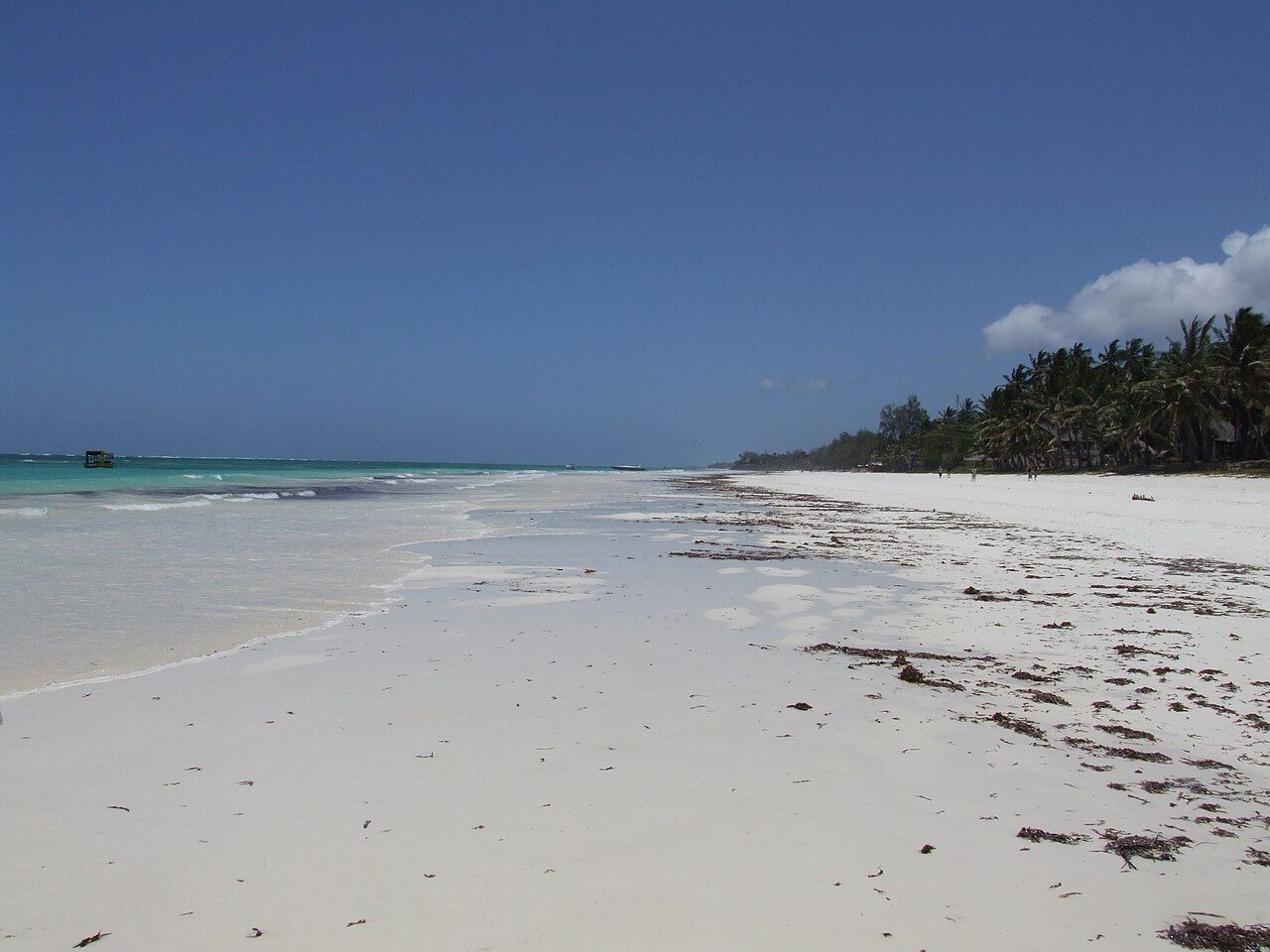
South of Mombasa, past the Likoni ferry, the coast road runs through palm groves and small towns to Diani. The beach is long and white, with a reef offshore that holds a calm lagoon at low tide. Behind it, patches of coastal forest still grow between the houses, home to monkeys found in few other places. A short drive inland, the Shimba Hills rise to a plateau of forest and grassland with a population of antelope found nowhere else in Kenya.
The beach
Diani's beach stretches for many kilometres, with fine coral sand and palms along the top. The water inside the reef is warm and shallow, and at low tide it is calm enough for children. The beach is public, and you share it with fishermen, families from Mombasa at weekends, and vendors selling everything from fruit to boat trips. A polite and clear "no, thank you" is all that is needed if you are not interested.
At the north end, near the mouth of a small river, stands an old coral-stone mosque at Kongo, surrounded by baobabs. It is still a place of worship, so dress modestly if you visit and ask before entering or taking photographs.
Away from the sand, Diani is a long strip of homes, small shops, markets and places to stay set back among the trees along the beach road. Fishing boats come in on the tide with the day's catch, and most of the people you meet here live and work on this coast all year.
Tides and the reef
The tides shape every day on this coast. At low tide, the lagoon empties and you can walk out across sand and seagrass towards the reef, peering into pools with small fish, sea stars, sea urchins and anemones. At high tide, the water covers it all and the beach narrows. Tide tables are easy to find locally; plan reef walks and swims around them.
Wear reef shoes in the lagoon to protect against urchin spines and sharp coral. Do not stand on coral, touch it or take shells from living reef: the reef is fragile and protected. Snorkelling is best on the outer reef and further south around the marine parks near Shimoni, with clear water and turtles, rays and many reef fish.
The coast has two monsoon seasons. From roughly December to March, the northeast monsoon brings calm seas and clear water. From roughly April to October, the southeast monsoon brings stronger winds, rougher seas and seaweed on the beach, with the heaviest rains around April to June.
Colobus in the trees
The Angolan black and white colobus, with long white whiskers and a long white tail, lives in the coastal forest patches around Diani. Colobus spend almost all their time in the trees and eat leaves. As forest has been cleared for building, many have to cross the beach road to move between patches, and traffic has killed many of them. Rope bridges strung across the road now let them cross overhead, and you may see them using them.
Sykes' monkeys, vervets and baboons also live around the beach. All will take food if they can, and feeding them leads to aggressive behaviour and conflict with people. Keep food out of sight, close windows and doors, and never feed monkeys.
Colobus are easiest to see in the early morning, when they sit high in the canopy feeding and sunning themselves. Listen for their deep, rolling calls at dawn, and look for the flash of white tails hanging below the branches.
The Shimba Hills
Shimba Hills National Reserve lies inland from Diani and south of Mombasa, on a plateau that rises a few hundred metres above the coast. It is cooler here, with sea breezes and mist on some mornings, and the vegetation is a mix of coastal rainforest and open grassland. From viewpoints on the edge of the plateau, you look out over the coastal plain to the sea.
The reserve is the only place in Kenya where sable antelope live. Sable are tall and dark, with long backward-curving horns: the males are almost black, the females chestnut brown. They graze in the open grassland, often in small herds. Elephants are common, along with buffalo, giraffe, bushbuck and many forest birds and butterflies.
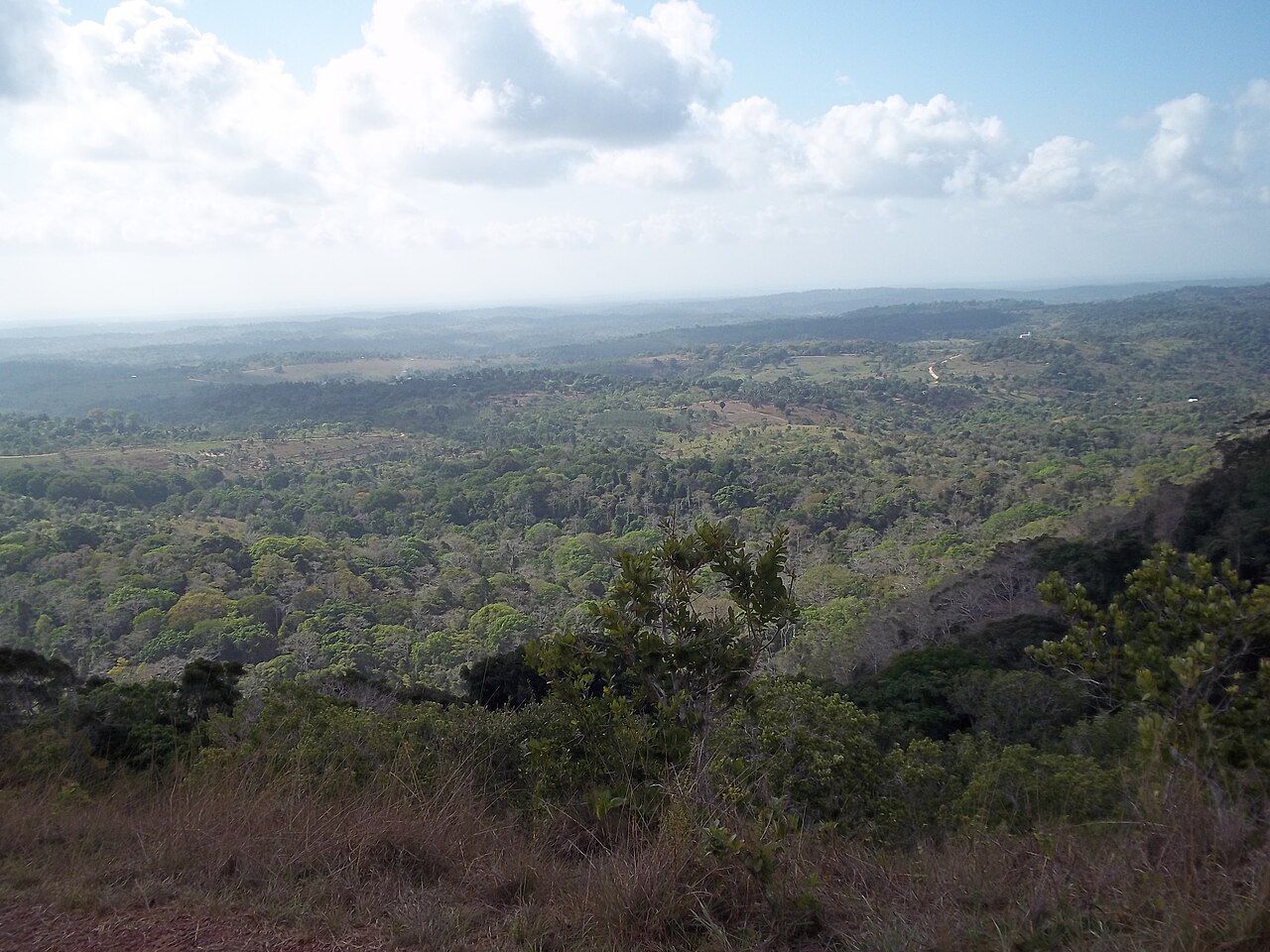
A walking trail, with a ranger, leads down through forest to Sheldrick Falls, where a stream drops into a pool. The walk takes a few hours and is steep and slippery after rain. Next to the reserve, the Mwaluganje Elephant Sanctuary is a community-run area where local landowners have set land aside for elephants on their migration route; visits support those communities.
Seasons and planning
The driest months on the south coast are roughly December to March and July to October. The long rains, roughly April to June, bring heavy downpours, rough seas and seaweed, and the short rains around November bring a few weeks of showers. The heat and humidity are high all year; the Shimba Hills are a welcome break.
From Mombasa, Diani is about an hour's drive south, depending on the ferry queues at Likoni or the newer bypass route. There is also a small airstrip at Ukunda. Shimba Hills is half an hour to an hour inland from Diani by road, and tracks inside the reserve can be slippery after rain.
Kenya Wildlife Service manages the reserve and the marine parks. For a safari inland, Tsavo East is a few hours' drive from the coast.