
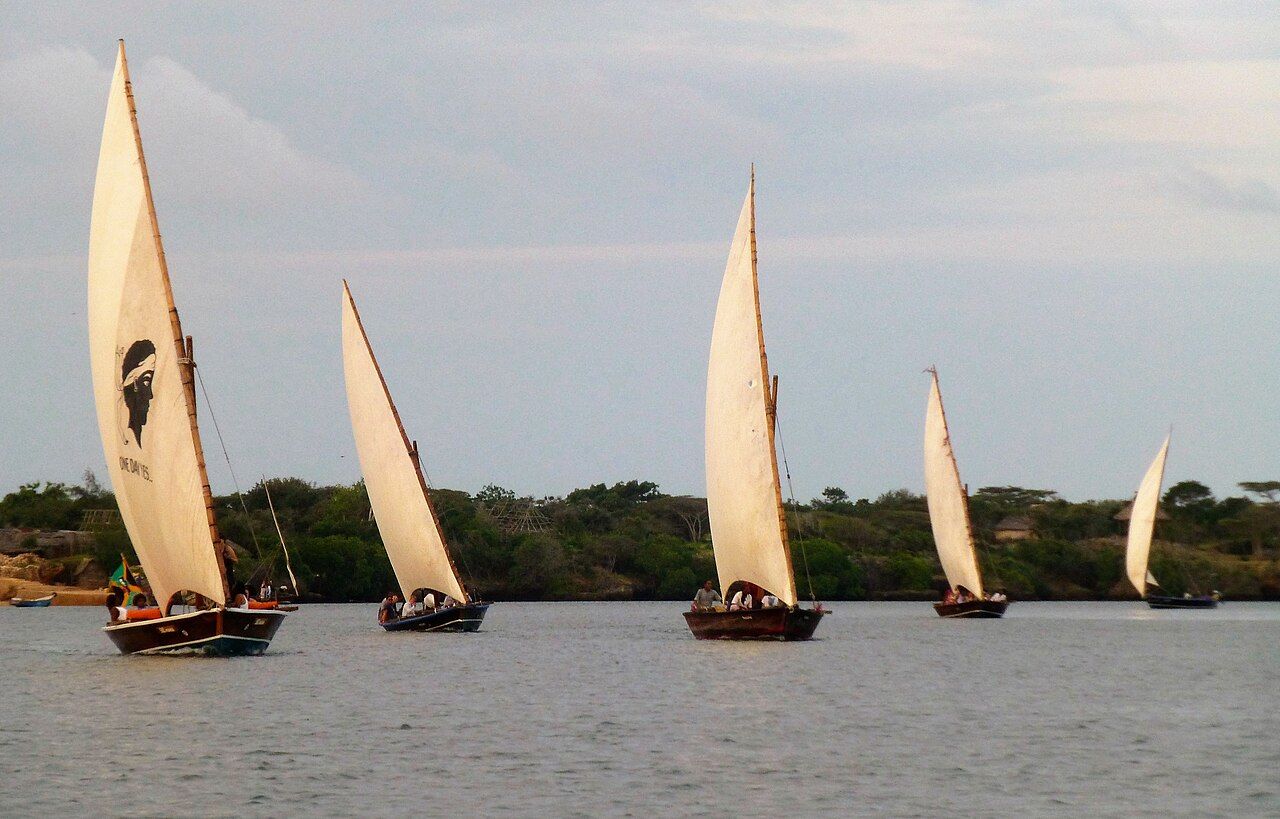
Lamu lies off the northern coast of Kenya, an island in an archipelago of mangrove channels and sand dunes not far from the Somali border. Its main town is one of the oldest continuously inhabited towns on the East African coast, and it still works much as it has for centuries. There are no cars in its streets. Donkeys carry the loads, people walk, and boats are the way to get almost anywhere.
A town without cars
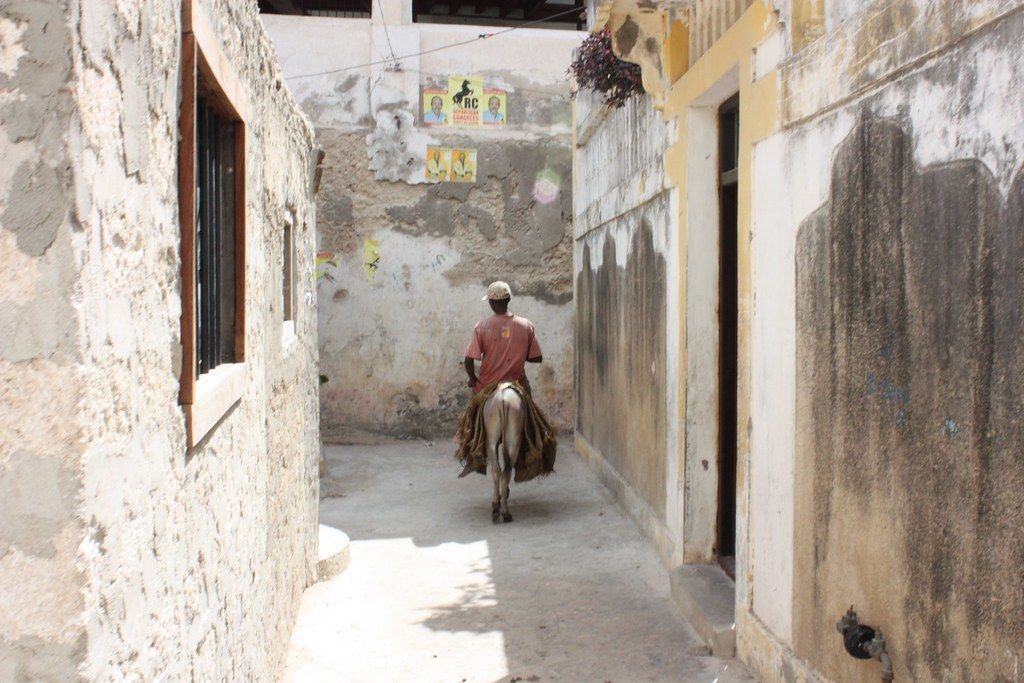
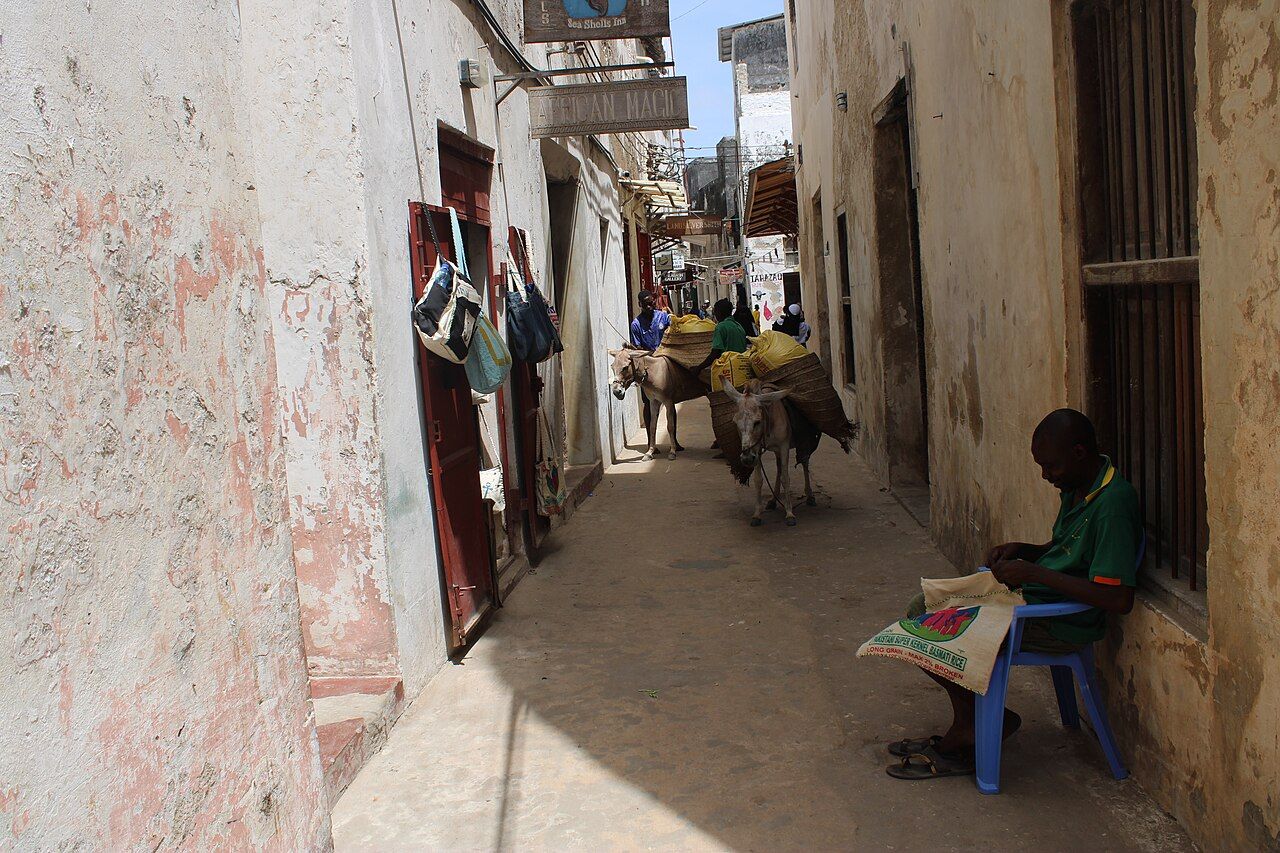
The streets of the old town are too narrow for cars, often only a few metres wide between high stone walls. Donkeys bring building materials, water and goods up from the waterfront, and you hear their hooves on the stone before you see them. Life moves at walking pace. Shops open onto the street, people sit on stone benches by their doors, and the call to prayer marks the hours.
Lamu Old Town has been listed by UNESCO since 2001 as the oldest and best-preserved Swahili settlement in East Africa. Its houses are built of coral stone and lime mortar, with thick walls, inner courtyards and flat roofs that catch the breeze. The doors are carved in wood, often with intricate geometric and floral patterns. Many are centuries old.
Inside, the larger houses were built around an open courtyard, with rooms on several floors opening onto it and plaster walls decorated with carved niches for porcelain and other prized objects. Stone benches called baraza line the outside walls by the doors, where men sit in the evening to talk. The architecture was made for the climate: high ceilings, thick walls and roof terraces that catch the sea breeze.
The town's history is told in the Lamu Museum on the waterfront and in the fort, a large building completed in the early nineteenth century near the main square. Smaller exhibits around the town cover Swahili house design and the traditions of the island.
Dhows and the waterfront
The waterfront is where the town meets the world. Dhows, the wooden sailing boats of the Indian Ocean, are moored along the quay or sailing in the channel with their triangular sails. Some carry goods along the coast and to the other islands, some take fishermen out, and some take visitors on trips through the mangroves or to the beaches at sunset. Boat builders still work along the shore of the archipelago, shaping hulls by hand from timber.
Ferries and small motorboats link Lamu to the airstrip on Manda Island, to Shela village and to the mainland. Watching the boats come and go from the waterfront in the late afternoon is one of the town's pleasures.
Fishing remains central to life across the archipelago, along with trade, building and, for many families, tourism. Mangrove poles cut in the channels have been used for building along this coast and traded far beyond it for centuries, and the mangroves themselves are protected and managed.
Shela and the dunes
Shela is a smaller village about half an hour's walk along the shore from Lamu town, or a short boat ride. Behind it, tall sand dunes run along the coast, and a long beach faces the open sea at the edge of the channel. The village has its own mosque with a distinctive minaret and old houses that have been restored.
Across the channel, Manda Island has the ruins of Takwa, a Swahili town abandoned centuries ago, reached by boat through the mangroves at high tide. Further afield, other islands in the archipelago have small villages and fishing communities.
Donkeys and daily life
Donkeys are the working animals of the town, and you will meet them everywhere: tied in the shade, carrying sand and stone, or ambling through the lanes on their own. Step aside to let a loaded donkey pass. A clinic on the island treats working donkeys, and many owners take their care seriously. Do not feed them, and do not ride a donkey that looks overloaded, injured or poorly cared for.
The town's rhythm follows the tide, the prayers and the heat. Mornings are busy at the waterfront and in the market, where fish, fruit and vegetables arrive by boat. The middle of the day is slow. In the late afternoon, as it cools, people come out again, and the waterfront fills with conversation, children playing and boats returning.
Respect and dress
Lamu is a conservative Muslim community, and the island's way of life deserves the same respect you would give to any home. In town, cover shoulders and knees, whatever your gender. Swimwear is for the beach, not the streets. Ask before photographing anyone, and accept a no without argument. Do not enter mosques unless invited, and never during prayer times.
During Ramadan, eating, drinking and smoking in public during daylight hours are best avoided, and the rhythm of the town changes, with more activity after dark. The Maulidi festival, celebrating the birth of the Prophet, brings visitors from across the region; the Lamu Cultural Festival, usually held later in the year, features dhow races, music and crafts. Dates change from year to year.
Manda airstrip and the Mokowe road
Most visitors fly to the airstrip on Manda Island and cross to Lamu by boat. The road to the mainland jetty at Mokowe crosses remote country, and conditions and security along it change. Lamu County borders Somalia, and parts of the county, especially near the border, have been affected by insecurity in recent years.
The driest months are roughly December to March and July to October. The long rains, roughly April to June, bring heavy downpours and rough seas. For older Swahili history on the coast, see the ruins of Gede near Watamu and the old town of Mombasa.