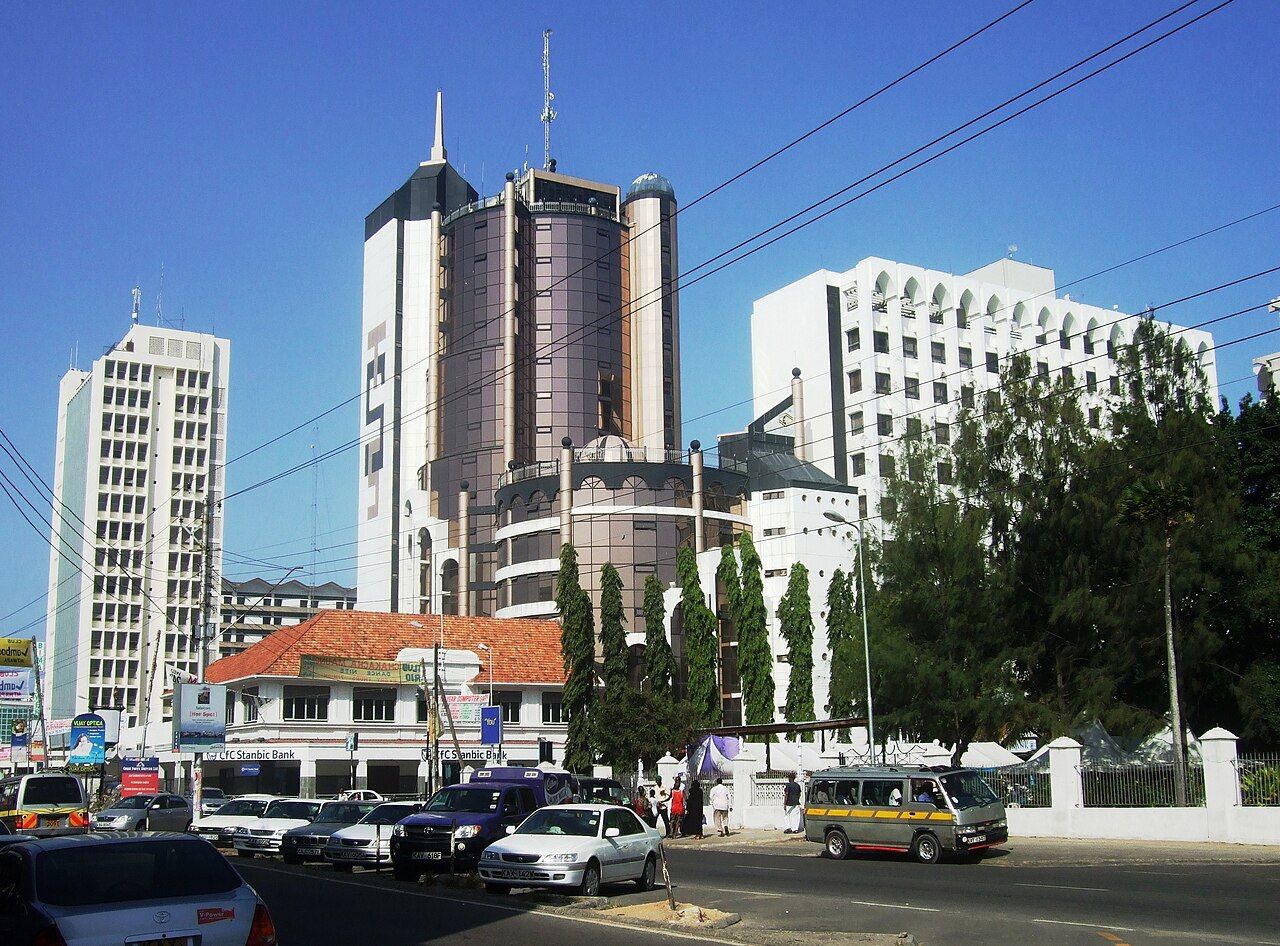
Mombasa is an island. It sits in a gap in the coral reef, joined to the mainland by a causeway, a bridge and a ferry, with deep water on either side that has made it a port for at least a thousand years. Traders from Arabia, Persia and India came here on the monsoon winds, and Swahili towns grew up along this coast from the mix of African, Arab and Indian Ocean cultures. Portuguese ships arrived at the end of the fifteenth century, followed by Omani rulers and later the British.
Most of that history is concentrated in a small corner of the island's east side, where the old town meets the harbour entrance. You can walk all of it in a day. Doing it slowly, with time in the fort and in the lanes behind it, gives you a sense of the coast that a beach week never will.
The fort above the harbour
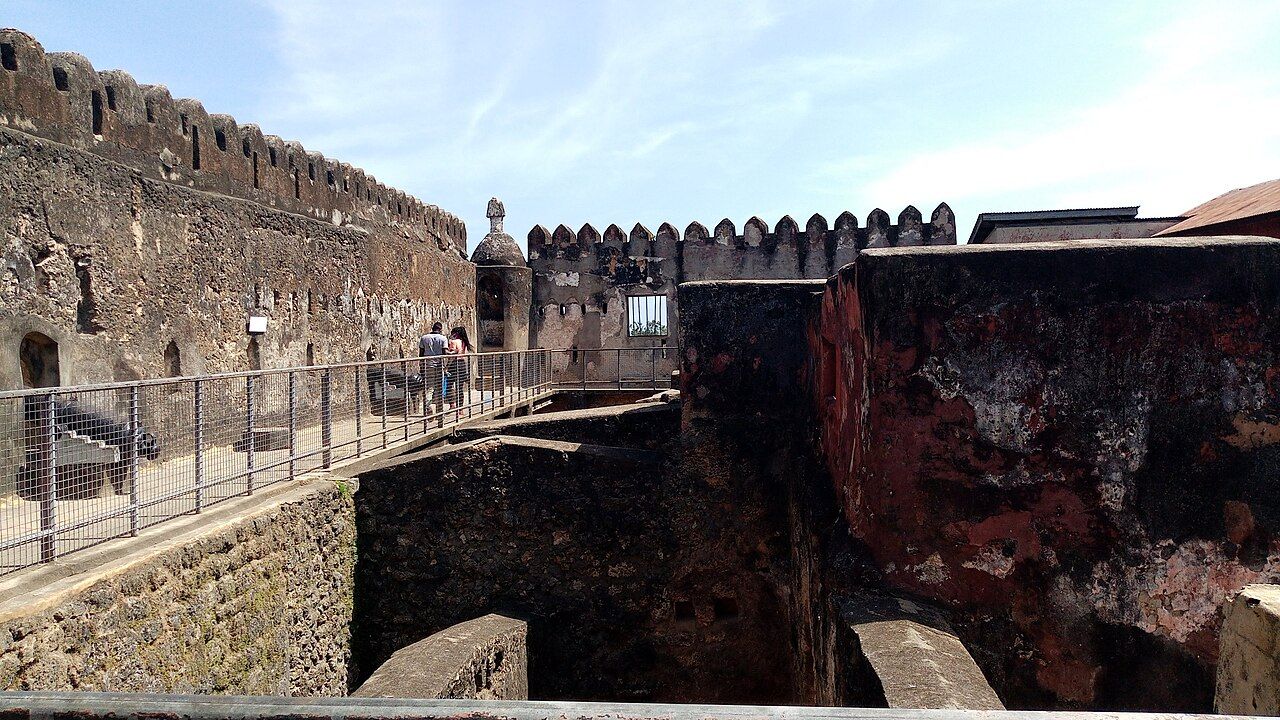
Fort Jesus was built by the Portuguese between 1593 and 1596 to control the harbour and the trade passing through it. It was designed by an Italian architect and laid out to the principles of the time, with angled bastions so that defenders could cover every wall with fire. From above, the plan is often compared to a human figure lying on its back. The walls are coral stone, thick and sloped, and they still dominate the waterfront.
The fort changed hands many times. Its best-known episode came at the end of the seventeenth century, when Omani forces besieged it for almost three years before it fell in 1698. From then on Mombasa was largely under Omani and then Mazrui rule until the arrival of the British in the late nineteenth century, who used the fort as a prison. It became a national monument and museum in the twentieth century, and it is now part of a UNESCO World Heritage listing.
Inside, the museum shows pottery, coins and objects recovered from the fort and from shipwrecks in the harbour, with exhibits on the coast's long trading history. Look on the walls of the old rooms for drawings scratched into the plaster, including sailing ships, thought to have been made by soldiers stationed here. Climb to the ramparts for the view over the harbour channel and the ships coming in.
The lanes of the old town
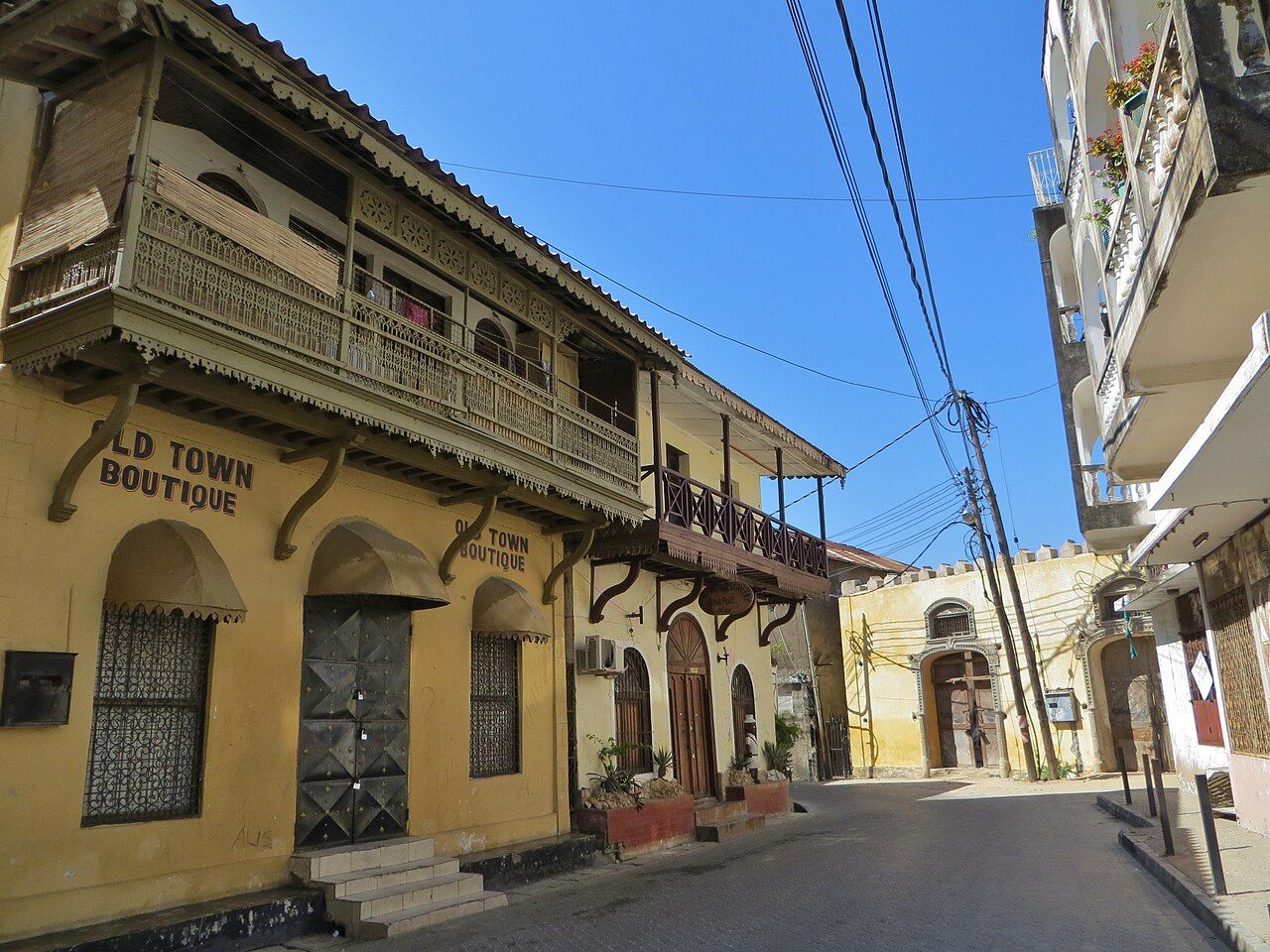
Behind the fort, the old town spreads north and west in a tangle of narrow streets, too tight for most cars. The buildings are a record of everyone who has lived here. Swahili houses of coral rag and lime plaster stand beside later buildings with carved wooden balconies hanging over the street, a style brought by traders and craftsmen from the Indian subcontinent. Many doors are heavy and carved, some with brass studs, and the patterns and their origins are a subject in themselves.
This is a living neighbourhood, not a museum. People live, shop, work and pray here, children walk to school, and the call to prayer comes from mosques throughout the day. The Mandhry Mosque, near the old harbour, is among the oldest on the island and still in use. As a visitor, cover shoulders and knees, keep voices low near mosques, and do not enter a mosque unless you are invited and it is not prayer time. Ask before you photograph anyone, and accept a no.
This is a living neighbourhood, not a museum.
The best way to see the old town is on foot, without a fixed route. Walk from the fort through the lanes to the old harbour, stopping where something catches your eye: a shop selling spices, a carpenter at work, a doorway open to a cool inner courtyard. A local guide licensed for the old town can add the history and stories behind the buildings, and helps you avoid getting lost in the maze.
Away from the busiest streets, look up as well as along. Many houses have small upper windows with wooden screens, built to let air in and keep the life of the house private. Some of the grander buildings carry dates and inscriptions over their doors. Others are crumbling, and conservation of the old town is an ongoing effort that depends on owners, residents and the authorities working together.
Swahili food is part of the walk. Street stalls and small cafés sell samosas, cassava chips with chilli and lime, grilled meat, sweet spiced tea and coffee poured from tall brass pots. Fresh coconut and seasonal fruit such as mango are sold from carts. Eat where the queues are local and the food is freshly made.
The old port
For centuries, sailing ships known as dhows arrived on the northeast monsoon from Arabia, the Gulf and India, carrying cloth, dates, spices and other goods, and returned on the southwest monsoon with ivory, timber, grain and, for a long and painful period, enslaved people. The old harbour below the town was their landing place. Today the big container ships use the modern port at Kilindini on the other side of the island, and the old harbour is quiet, with a few small boats and fishermen. Standing by the water, you can still picture the trade that shaped the whole coast.
The history of slavery on this coast is part of the story and is presented openly in the fort's museum and elsewhere in Mombasa. It is worth taking time over, not hurrying past.
Swahili, the language spoken across Kenya and much of East Africa, grew up in towns like this one, and Mombasa remains one of its centres. Its vocabulary carries words from Arabic, Persian, Portuguese, Hindi and English, a record of every ship that put in here. A few words of greeting, used with a smile, are always welcome in the lanes.
Mombasa as a safari start
Mombasa is the natural gateway to the coast and a practical starting point for safaris. The railway from Nairobi runs to a station on the mainland outside the city, and the journey takes roughly five to six hours, with views over the plains of Tsavo and often animals from the window. Flights from Nairobi take about an hour.
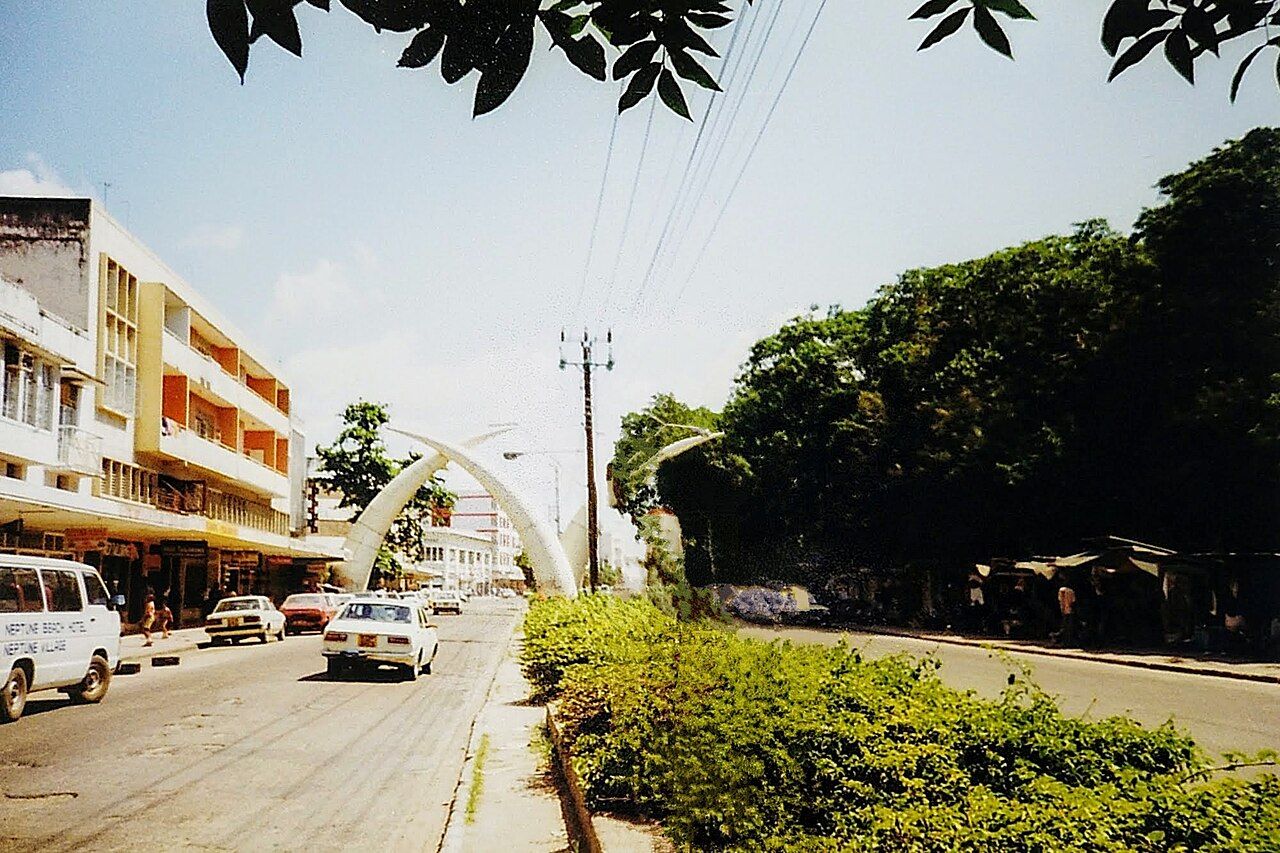
From Mombasa, Tsavo East and Tsavo West are both a few hours away by road, close enough for a safari of two or three days before or after time by the sea. To the south, a ferry crosses to the mainland for the road to Diani and the Shimba Hills. To the north, the coast road runs past Mtwapa and Kilifi towards Watamu and Malindi.
Mombasa is hot and humid all year. The long rains, roughly April to June, bring heavy downpours on the coast, and the months either side are the most comfortable. Mornings and late afternoons are the best times for walking the old town; in the middle of the day, the fort's shaded rooms or a slow lunch are a better use of the heat.
The modern city spreads far beyond the old town, across the island and onto the mainland on both sides. The main roads are busy and the traffic heavy, especially at the Likoni ferry and on the routes to the airport and the railway station, so leave more time than the distance suggests for any journey on a fixed schedule.