
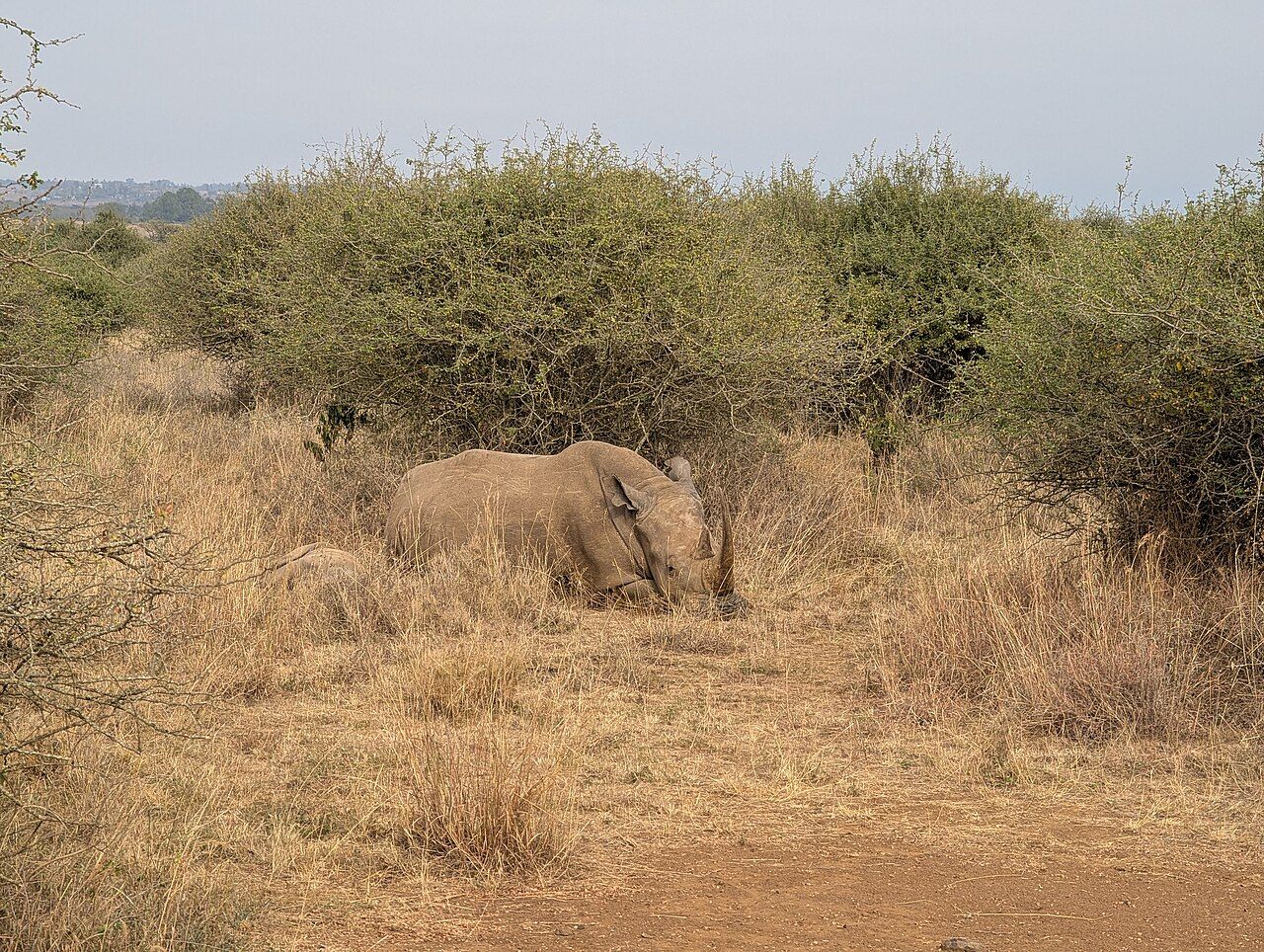
Few capital cities have a national park on the doorstep. Nairobi National Park begins about seven kilometres from the city centre, and on the plains inside it giraffes browse and rhinos graze with office towers on the horizon. Planes coming in to land pass low overhead. It is an odd combination, and it works better than it should.
The park is small, about 117 square kilometres, but it holds most of the large animals of the savannah, with one notable gap: there are no elephants. It also makes an easy first or last game drive for anyone flying through the city.
A park on the city's edge
Established in 1946, it was Kenya's first national park. The land is a mix of open grassland, acacia bush, a strip of highland forest in the west, and river valleys with steep sides along the Mbagathi and its tributaries. Small dams scattered across the plains hold water through the dry seasons and draw animals to them.
Before it was a park, the land was part of the Athi plains, grazed by Maasai herders and later used for hunting in the early colonial years. As the city grew, pressure from conservationists led to its protection soon after the Second World War.
The city has grown around three sides. Roads, housing and industry run up to the fence, and the standard gauge railway crosses the park on a long raised bridge, a decision that was strongly contested when it was built. The park's future depends on how Nairobi manages that pressure.
Rhinos and lions
The park is one of Kenya's most important sanctuaries for black rhinos, and its animals have been used to restock other parks. White rhinos are present too. Because the grass is often short and the ground fairly open, rhinos here can be easier to see than in larger, thicker parks. Scan the plains in the early morning and look around the dams.
Rhinos are still targeted by poachers across Africa, and rangers watch the park's animals closely. Enjoy a sighting quietly, keep your distance, and avoid posting exact locations online in real time.
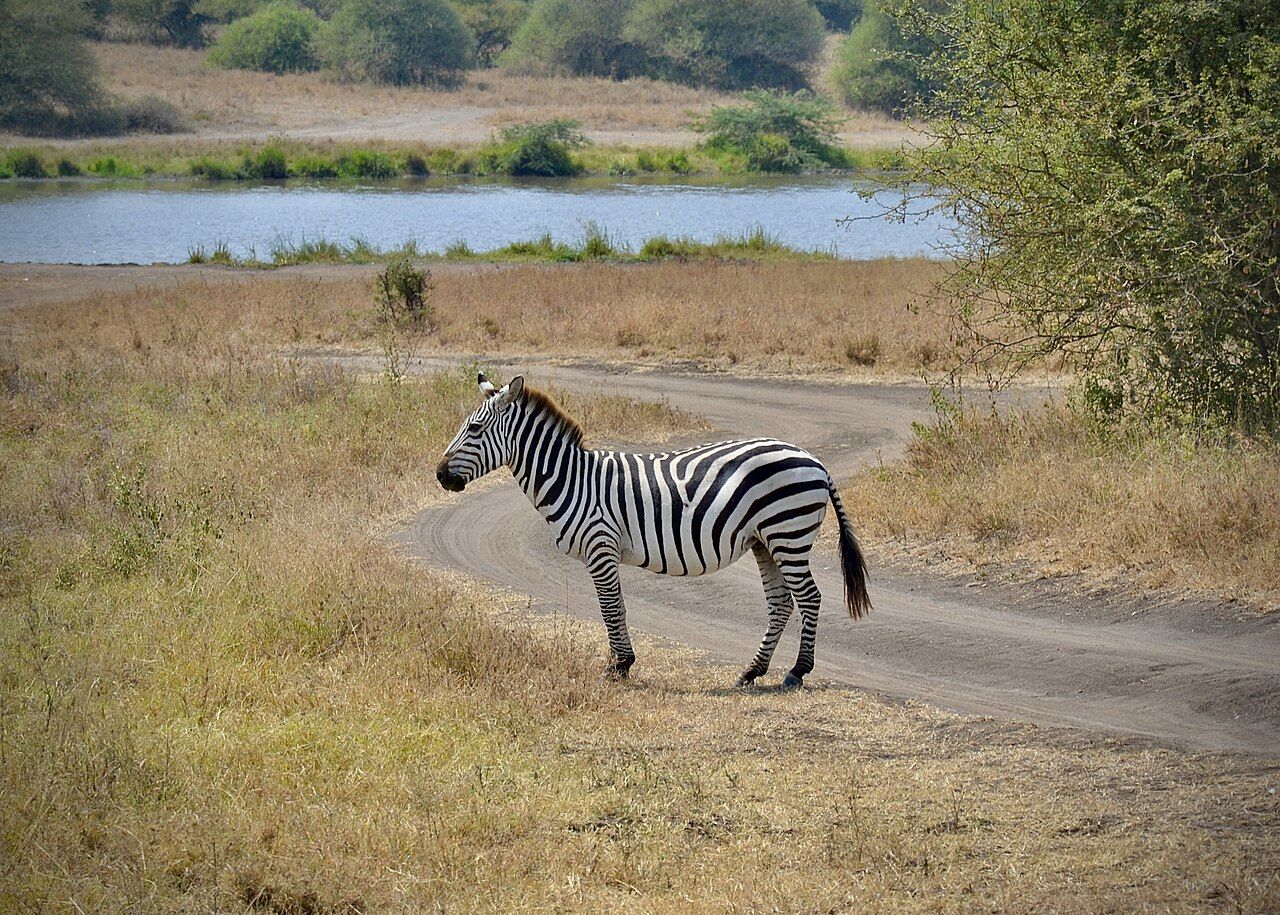
Lions live in the park and are often found in the early hours near the forest edge or in the valleys. Cheetahs and leopards are present but harder to find. Buffalo, zebras, elands, hartebeest, impalas, Grant's and Thomson's gazelles and ostriches graze the plains, and several hundred species of birds have been recorded. At the hippo pools along the river, a marked trail lets you walk a short way, usually with a ranger.
The open southern side
The city side is fenced. The southern boundary, along the Mbagathi River, is not. Beyond it lie the Kitengela and Athi plains, Maasai land where wildebeest, zebras and other animals have long moved in the wet season, grazing and calving before returning to the park's water in the dry months. Lions sometimes follow them out.
That corridor has narrowed sharply as fences, houses and quarries have spread across the plains. Landowners, conservation groups and the government have tried land-leasing schemes and other approaches to keep it open, and the debate over how to protect the dispersal area while respecting the rights of those who own it continues. It is a small version of a question asked around almost every park in Kenya.
The ivory-burning site
In 1989 Kenya's then president set fire to a pile of roughly twelve tonnes of confiscated elephant ivory inside the park. The fire was seen around the world and helped build support for the international ban on the ivory trade agreed later that year. A monument marks the spot, and it is a quiet place to stop.
In 2016 Kenya burned a far larger stockpile, more than a hundred tonnes of ivory together with rhino horn, in the same park. Both burns were meant to show that seized ivory would never be sold back into the trade.
Opinions on the burns were not unanimous. Some argued that stockpiles should be sold to fund conservation; others held that any legal sale feeds demand and gives cover to smuggling. Kenya chose to destroy them.
The elephant orphanage nearby
Close to the park's western edge, a long-running orphanage raises elephant calves that have lost their mothers to poaching, drought, conflict or accidents. The calves are hand-reared and later moved to Tsavo, where they are gradually returned to the wild over several years. A short public viewing is usually held at set times. The point of the work is release, and it is worth seeing in that light rather than as entertainment.
The calves that come through it are a reminder that the threats facing elephants are not over. Drought, fragmented land and conflict with farmers leave young animals stranded every year, and the work of returning them to wild herds takes far longer than most visitors expect.
Langata Road and the morning traffic
The main gate is on Langata Road, south-west of the centre, and there are other entrances, including on the eastern side. Morning traffic in Nairobi can be heavy, so set off early; the first hours after opening are usually best for animals anyway. A half day is enough for a good drive, and a full day lets you explore the southern valleys.
The park works for a short visit in a way few others do. If you have a free morning before an evening flight, an early drive is realistic, but leave a wide margin for traffic on the way to the airport.
Tracks are dirt and turn slippery after rain, especially on the black cotton soil of the plains. Many travellers start here before heading to Amboseli or the Masai Mara, or end here before a flight. For timing across the year, see our page on the seasons.