
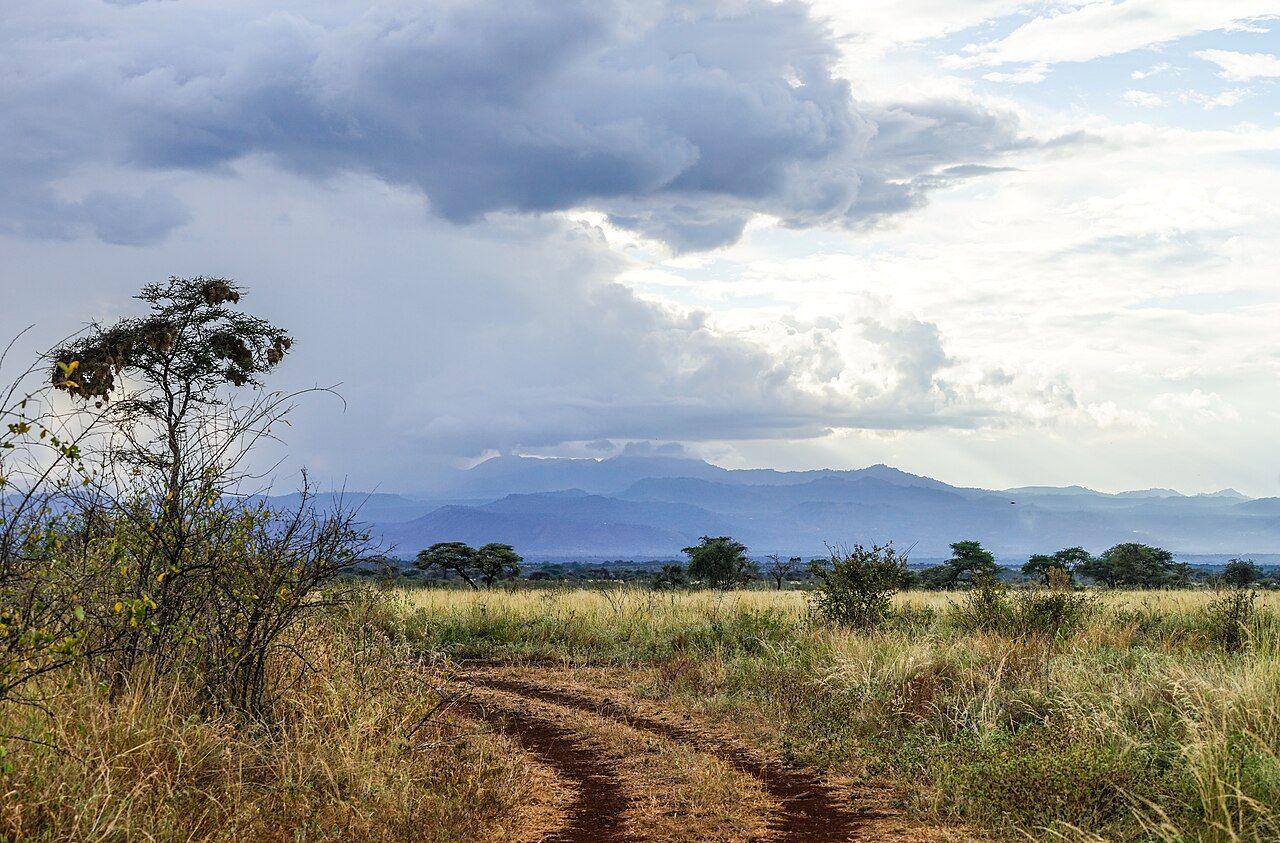
East of Mount Kenya and the Nyambene Hills, the land falls away towards the hot lowlands of the Tana basin. Meru National Park sits on that slope, a park of rivers, swamps and tall grass, with doum palms along the water and bare red earth between. To the north, beyond Isiolo, Shaba National Reserve spreads across dry country around a rocky hill. Neither place gets many visitors, and for some people that is the whole point.
Meru: a park of rivers
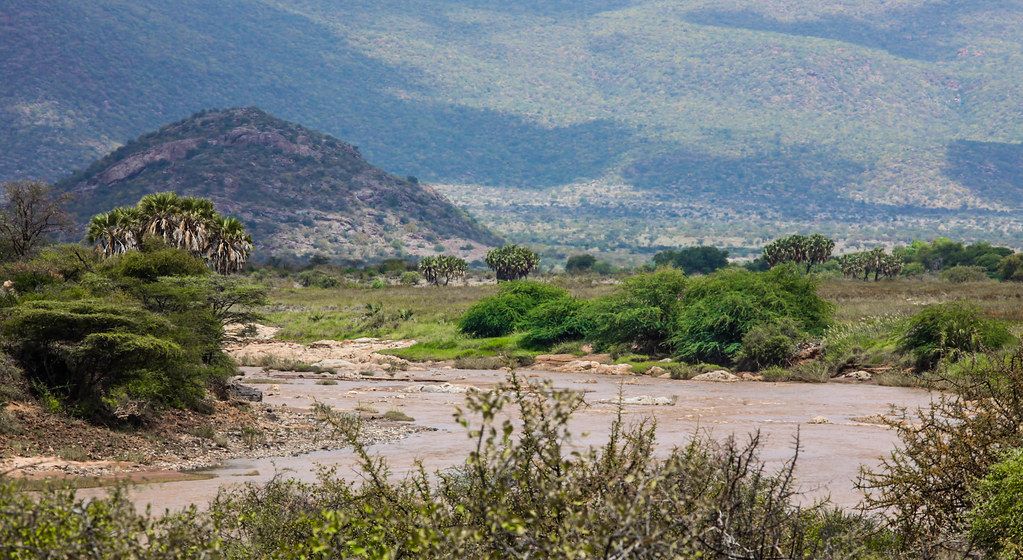
Meru is well watered for the north. A number of permanent rivers and streams run down from the Nyambene Hills across the park, and the Tana, Kenya's longest river, forms part of its southern edge. Along each river a belt of palms and riverine forest gives way to open grassland and bush. The result is a park that looks greener and more varied than its neighbours, with long grass in places that can make animals hard to spot.
That grass is part of the experience. You see fewer animals per hour here than on the open plains of the south, but the ones you find are often alone with you. Lesser kudu step out of thickets. Elephants, buffalo, lions and leopards are present, along with northern species such as Grevy's zebra, reticulated giraffe, gerenuk and Beisa oryx. Hippos and crocodiles live in the larger rivers, and the birdlife along the water is rich.
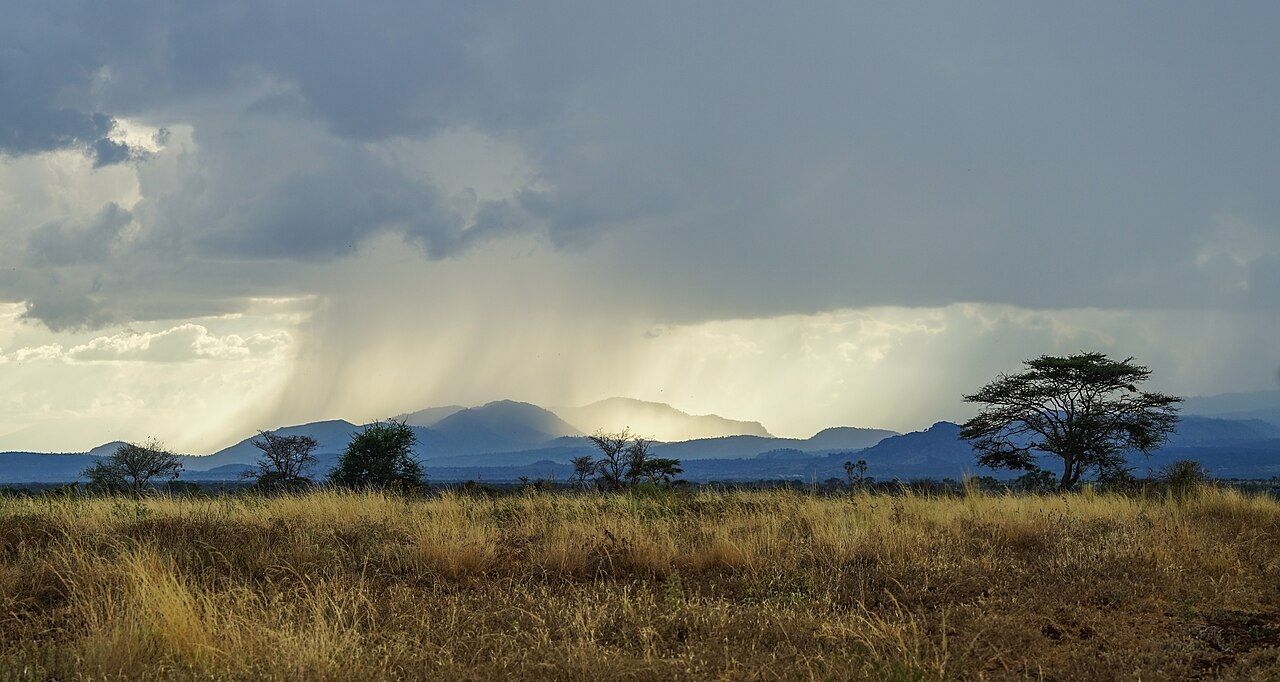
Meru also has a fenced rhino sanctuary within the park, holding both black and white rhinos. Access and viewing rules change, so ask at the gate.
The lions of Born Free
Meru is tied to one of the best-known wildlife stories of the twentieth century. In the late 1950s, Joy and George Adamson raised an orphaned lioness named Elsa. Joy's book about her, Born Free, published in 1960, became an international bestseller and was later made into a film. Elsa was returned to the wild in the area that became Meru National Park, and she died there in 1961. Her grave is in the park.
The rest of the story is less often told. Both Adamsons spent the rest of their lives working with wild cats in northern Kenya. Joy was killed in 1980 in Shaba, where she had been working with a leopard. George was killed in 1989 near his camp in Kora, the reserve adjoining Meru, while he was still working with lions. The story is worth knowing as history, including the debates it raised about returning hand-raised animals to the wild, rather than as a legend.
Decline and recovery
In the 1970s and 1980s, Meru suffered badly from poaching and insecurity. Its rhinos were killed, elephant numbers fell and visitors stayed away. From the 1990s the park was rebuilt with new roads, better protection and the reintroduction of animals moved from other parks. Wildlife numbers recovered over the following years, though the park still feels wilder and less managed than the busy reserves of the south.
That history is one reason Meru is quiet today. Its reputation took a long time to change, and many itineraries still skip it in favour of the better-known names. For a visitor, the effect is a park where you can drive for an hour along a river without meeting another vehicle.
Meru and its neighbouring reserves now form part of a wider conservation area, with Kora and other protected lands joined along the Tana. The links between them let animals move across a much larger area than any single park could hold.
Shaba and its springs
Shaba National Reserve lies east of Samburu and Buffalo Springs, south of the Ewaso Ng'iro. Its name comes from the Swahili word for copper, a reference to the colour of the soil and rock. The country is drier and rockier than Samburu, with lava ridges, scattered hills and open plains broken by acacia and commiphora scrub.
Springs rise in several places in the reserve, feeding small swamps and patches of palm and green grass that stand out sharply against the dry land around them. In the dry season these springs and the river draw animals from a wide area, and they are the best places to wait. The same northern specials as Samburu live here, together with lions, leopards and cheetahs, but you will share them with far fewer vehicles.
Few vehicles, more patience
Quiet parks ask for a different approach. Without a crowd of vehicles to show you where a lion is resting, you find animals by reading the land: water, shade, fresh tracks across the road, birds alarmed in a thicket. Drive slowly, stop often, and switch the engine off when you do. Give yourself time at the rivers in the heat of the day, when animals come down to drink.
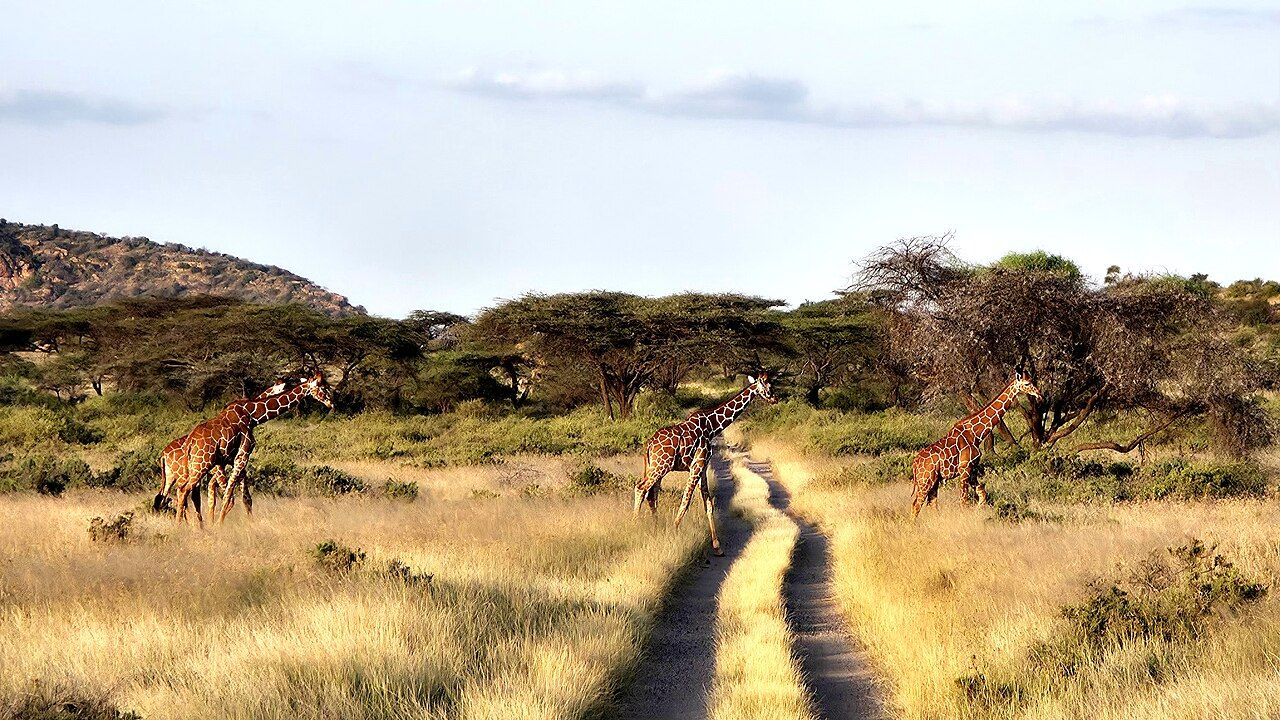
The same rules apply as anywhere else. Stay on the tracks, keep your distance from elephants with calves and do not crowd predators. The pages on ways to go on safari say more about distance and conduct.
Rivers, swamps and the Isiolo road
Meru is roughly six to seven hours by road from Nairobi, via Nanyuki and Meru town or via Isiolo. Airstrips serve both Meru and the Samburu area. Tracks inside Meru cross many rivers and swamps, and after rain some become impassable, so ask at the gate. The dry months, roughly June to October and January to February, are the easiest for driving and for finding animals near water.
Meru is managed by the Kenya Wildlife Service, and Shaba by the county government. Conditions in northern Kenya also vary by area.